0
Your Cart
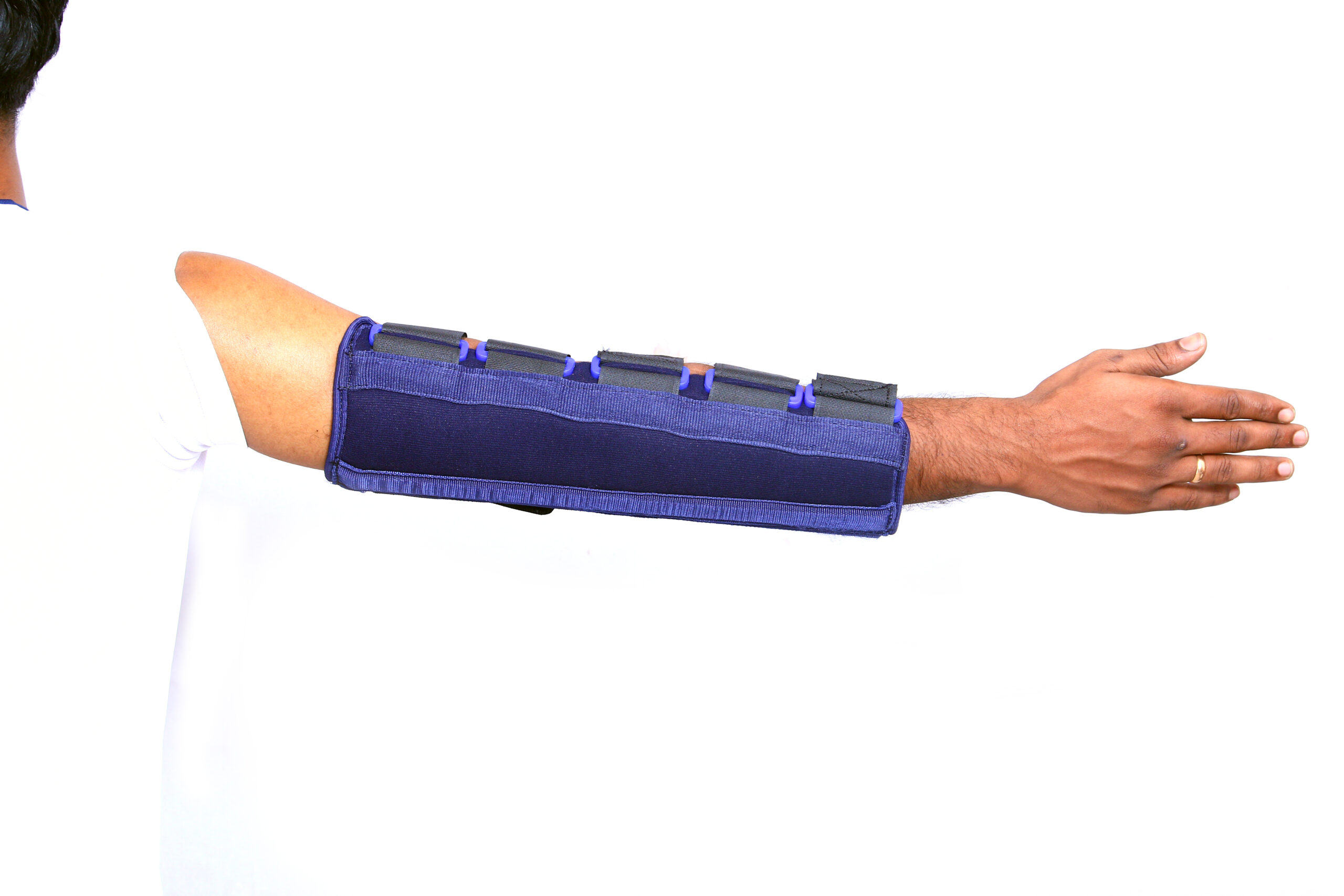
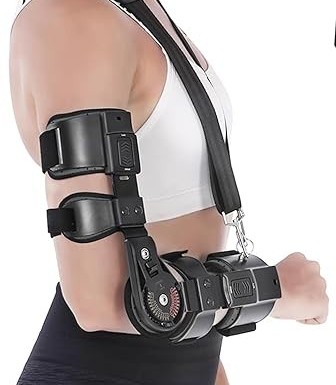
An elbow immobilizer is a rigid or semi-rigid orthopedic brace designed to completely prevent flexion and extension of the elbow joint. It is primarily used to protect healing tissues, stabilize fractures, or prevent self-injury (such as interference with IV lines in pediatric or post-surgical patients). 
Key Product Specifications (2026)
  • Design & Structure:
    • Stay System: Features 3 to 4 rigid aluminum or plastic stays (supports) positioned around the arm to lock the elbow in a straight or slightly flexed position.
    • Wrap-Around Style: A “cuff” or “sleeve” design that wraps around the arm and secures with multiple straps.
    • Ambidextrous: Typically designed as a universal fit for either the left or right arm.
  • Materials:
    • Fabric: Constructed from high-quality medical-grade foam laminate or breathable 3D mesh to ensure airflow and skin comfort during 24-hour use.
    • Inner Lining: Features soft, non-slip cotton or fleece lining to prevent the brace from sliding down the arm and to minimize skin irritation.
  • Mechanical Features:
    • Fasteners: Utilizes high-strength hook-and-loop (Velcro) straps for graduated compression and easy adjustment.
    • Removable Stays: Many 2026 models feature removable stays, allowing the brace to be used as a soft support once full immobilization is no longer required.
  • Weight: Extremely lightweight, typically between 150g and 250g, to prevent shoulder fatigue. 
Sizing and Dimensions
Unlike ROM braces, elbow immobilizers are often sized by the length of the brace and the circumference of the arm: 
  • Pediatric/Small: Length of approx. 15–20 cm (6″–8″).
  • Adult/Medium-Large: Length of approx. 25–35 cm (10″–14″).
  • Universal: Often 30 cm (12″) in length with long straps to accommodate bicep circumferences up to 40 cm. 
Therapeutic Indications (2026)
  • Post-Trauma: Used for stable fractures of the distal humerus, olecranon, or radial head.
  • Nerve Management: Frequently prescribed for Cubital Tunnel Syndrome to prevent the elbow from bending during sleep, reducing pressure on the ulnar nerve.
  • Pediatric Care: Often referred to as “no-no” splints to prevent children from touching their faces after cleft palate surgery or from pulling out medical tubes.
  • Post-Surgery: Provides essential stabilization after ligament repairs or tendon transfers where any joint movement could compromise the surgical site. 
Care & Maintenance
  • Washability: Most models are hand-washable after removing the metal stays.
  • Durability: Materials are selected to withstand daily use for 4–8 weeks of recovery. 

Reviews

There are no reviews yet.

Be the first to review “Elbow Immobilizer”

Your email address will not be published. Required fields are marked *